
Beach Houses in San Diego for Sale: A Buyer's Guide
Justin Halbert | Point Loma | Luxury Real Estate
This is a subtitle for your new post

You wake up to the idea of ocean air, a walkable shoreline, and coffee with a view. Then you open the listing apps and realize most searches for beach houses in san diego for sale feel incomplete. The photos look great, but they rarely tell you what matters: which block gets the better light, whether the “ocean view” is seated or standing, how parking works in July, or how many serious buyers are circling before a home ever hits Zillow.
That gap matters more now than it did a few years ago. San Diego’s coastal luxury segment has been moving on a different track than the broader market, and the buyers who do best are the ones who understand the unwritten rules early. Browsing portals is fine for orientation. It’s not enough for making a smart offer on a coastal property where tiny details can shift value fast.
Table of Contents
- Introduction
- Understanding the 2026 San Diego Beach House Market
- Coastal homes follow different rules
- What buyers should take from this
- Find Your Perfect Fit Comparing Coastal Neighborhoods
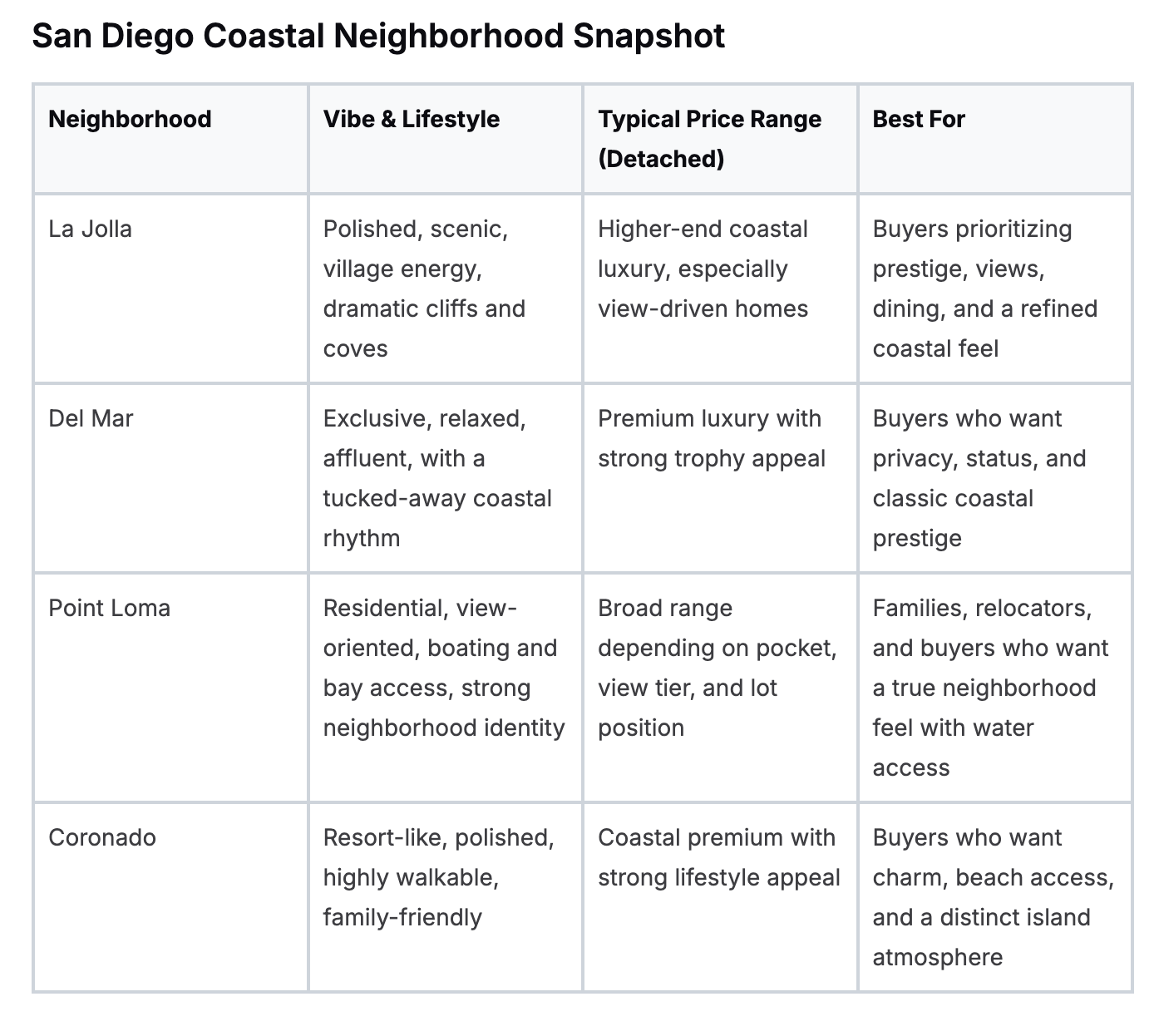
- San Diego Coastal Neighborhood Snapshot
- How to narrow your search the right way
- The hidden layer most buyers miss
- Your Search Strategy Finding Hidden Gems
- What to look for on the tour
- Hidden gems usually aren’t obvious
- Making a Winning Offer and Navigating Inspections
- What makes an offer persuasive
- Price the home like an appraiser would
- Use inspections for verification
- Why a Local Strategist is Your Greatest Advantage
Introduction
Buying near the water in San Diego sounds simple until you start comparing what one “beach house” really means from one neighborhood to the next. A bluff-top property in La Jolla, a bay-oriented home in Point Loma, and a sand-close house in Mission Beach may all show up in the same search. They are not interchangeable assets.
The practical problem is that public listings flatten nuance. They don’t explain view tiers, lot orientation, short-term noise patterns, parking scarcity, salt-air wear, or whether the home feels private once the tourists arrive. Those are the things that separate a smart coastal buy from an expensive lesson.
A seasoned coastal buyer learns to stop asking, “Is this close to the beach?” and start asking better questions. Is the view protected? Does the layout use the view? Is the home turnkey, or will deferred maintenance show up after close? Does the block trade on lifestyle, privacy, rental demand, or pure trophy appeal?
Beach property value in San Diego is rarely set by distance to water alone. Access, orientation, condition, privacy, and parking can matter just as much.
That’s why a serious buyer needs more than saved searches. You need a working framework for judging real value in micro-markets that behave differently, often street by street.
Understanding the 2026 San Diego Beach House Market
San Diego’s coastal market doesn’t move as one unit. The luxury beach segment has been stronger and faster than many buyers expect, especially at the top end where presentation, location, and scarcity drive decisions.
In late 2025, a Del Mar beachfront estate sold for $50 million, and luxury homes priced above $6 million shifted from an average of 750 days on market to about 223 days, a 70% faster pace, according to Housing.info’s San Diego coastal luxury market report. That tells you something important. Trophy coastal product still attracts decisive buyers when the home checks the right boxes.
Coastal homes follow different rules
Move-in-ready homes consistently draw more attention than properties that need obvious work. In the coastal zone, buyers don’t just price renovations by contractor bids. They price them by inconvenience, permit uncertainty, and time lost during prime ownership months.
That’s why a polished home often trades differently from a comparable one that looks similar on paper. Two houses can share square footage and lot size, but if one has clean sightlines, updated systems, and a layout that captures the view, it will usually get a much warmer reception.
A few broad truths hold up across coastal San Diego:
- Turnkey matters: Buyers pay for homes that feel ready now, not eventually.
- Lifestyle sells: Walkability, privacy, and usable outdoor space carry real weight.
- Micro-location drives value: One side of the street can live very differently from the other.
For a broader read on where coastal trends have been heading, this San Diego real estate 2025 recap and 2026 outlook is useful context.
What buyers should take from this
If you’re waiting for a generic “perfect time” to buy a beach house, you’re asking the wrong question. The actual question is whether you’re prepared to recognize value quickly when the right property appears.
Practical rule: In coastal San Diego, speed without clarity is risky. Clarity without speed loses houses.
The buyers who win are usually the ones who already know their essential requirements, understand their target micro-market, and can separate cosmetic noise from true value.
Find Your Perfect Fit Comparing Coastal Neighborhoods
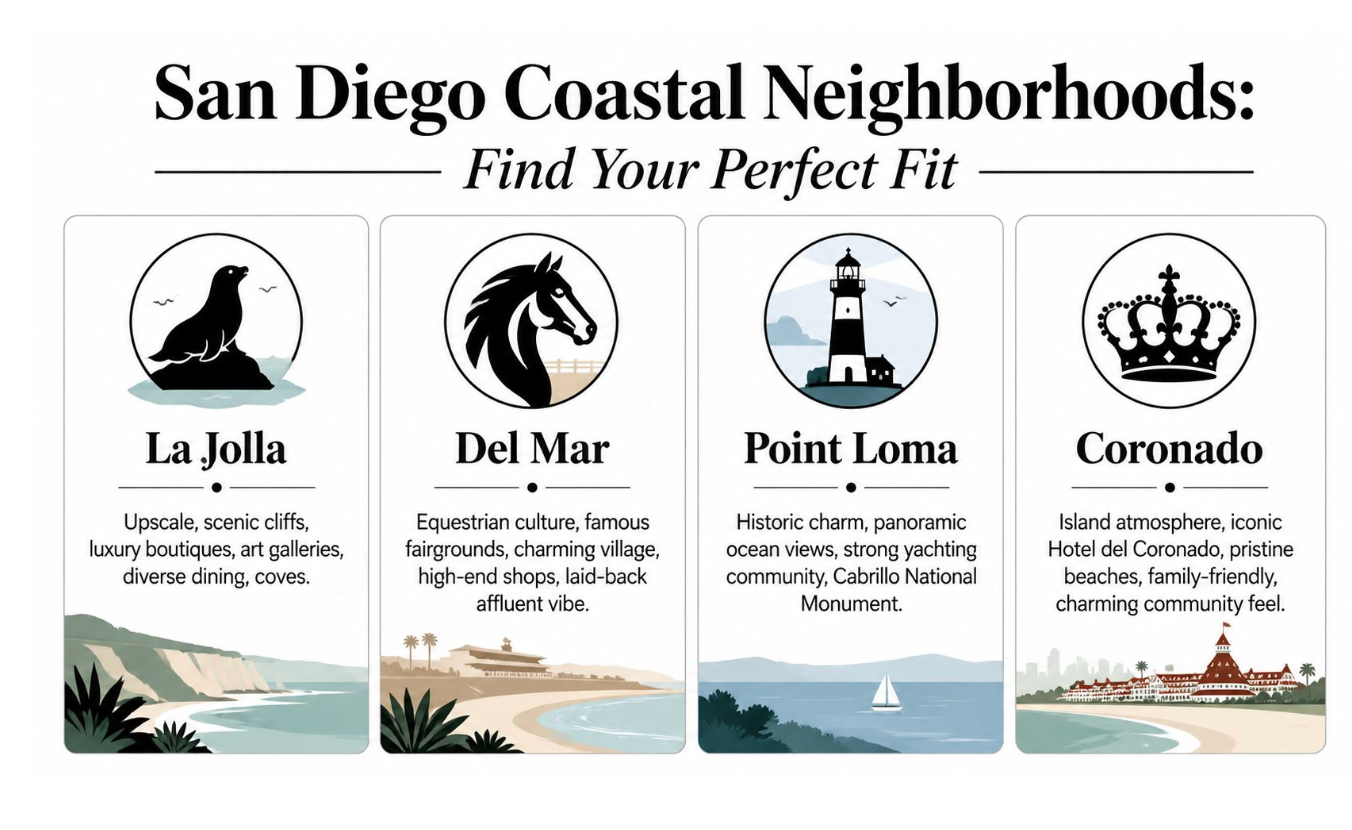
A smart search starts by narrowing the lifestyle first. Buyers waste time when they search all coastal neighborhoods at once as if they serve the same goal. They don’t.
How to narrow your search the right way
Start with how you want to live on an average Tuesday, not what looks best in drone photos.
If you want village walkability, upscale shops, and dramatic scenery, La Jolla usually rises quickly. If you want a quieter prestige play with a tucked-away feel, Del Mar often makes more sense. If boating, bay views, neighborhood depth, and varied pockets matter, Point Loma deserves a hard look.
Coronado brings a very different experience. It feels contained, polished, and easy to get around, which appeals to buyers who care more about everyday livability than a raw cliffside statement.
The hidden layer most buyers miss
Public searches only show part of the field. According to Zillow beach house search context with 2025 company data referenced in the verified brief, public sites may show around 300 beach houses for sale, but 30% to 40% of luxury transactions occur through private agent networks.
That changes how you should search.
Use this quick checklist before you commit to one neighborhood:
- Define your view threshold: Is a peek enough, or do you need a full seated view from the main living area?
- Realistically test parking: One-car parking near the beach may be fine for some households and a deal-breaker for others.
- Check privacy at street level: A great interior can still feel exposed once you step onto the patio.
- Map your real routine: Walkability means different things if you want coffee shops, surf access, yacht club proximity, or schools.
- Ask about off-market options: If you’re only seeing portal inventory, you may be seeing the leftovers in certain price tiers.
Good coastal searches get narrower as they get smarter.
Your Search Strategy Finding Hidden Gems
Most buyers start on the portals, and that’s fine. The mistake is staying there too long and assuming the algorithm is showing the full market.
A better approach is to use public inventory for pattern recognition, then layer in agent network access, local block knowledge, and property-level screening. That’s especially true if you’re targeting highly specific homes rather than generic coastal inventory. Buyers who want a sharper search process can start with a focused San Diego home search tool, then refine from there based on actual touring feedback.
What to look for on the tour
The best coastal buyers don’t just react to staging. They audit the house.
Use a field checklist like this:
- Do the couch test: Sit where the furniture naturally goes. If the view only works while standing at the window, value that accordingly.
- Watch the light: Morning sun, afternoon glare, and wind exposure can change how a home lives.
- Inspect salt-air wear: Railings, windows, exterior hardware, and roofing details often tell the truth quickly.
- Check the sound: Some homes look calm in photos but carry road, foot traffic, or boardwalk noise.
- Study layout efficiency: A great lot can still have a weak floor plan that wastes the best angles.
The photos sell the dream. The tour tells you whether the house actually supports the life you want.
Here’s a short video that helps frame the search process visually:
Hidden gems usually aren’t obvious
A hidden gem is rarely the cheapest home on the street. It’s more often the property where the market underestimates one advantage and overreacts to one fixable flaw.
Examples include a home with a stronger interior orientation than its photos suggest, a quieter block than outsiders expect, or a bay-view position that lives better than a nominal ocean-view competitor. Some buyers also overlook homes that need cosmetic updating but have the right bones, sun, parking, and privacy.
What usually doesn’t work is chasing every new listing without a framework. That creates fatigue and weak decision-making. Coastal buying gets easier once you know exactly what you’re screening for.
Making a Winning Offer and Navigating Inspections
A strong offer isn’t just about number. In San Diego’s current detached market, homes are selling for 96% to 97% of original asking price, which makes initial positioning matter, according to Melina Rissone’s 2025 San Diego market review. The same verified data notes that a RENE-certified negotiator can often cap buyer concessions at 2% or less through strategic offer construction.
That should change how you think about the offer phase. If a house is right, your first offer should look informed, clean, and serious.
What makes an offer persuasive
Sellers and listing agents read more than price. They’re reading probability of close.
A persuasive offer usually includes:
- Clear financial strength: Proof of funds and lender credibility matter.
- Tight terms: Cleaner contingencies reduce perceived risk.
- Market-based reasoning: If your price differs from list, justify it through condition, layout, or view quality.
- Professional presentation: Sloppy paperwork signals future friction.
Price the home like an appraiser would
Beach houses don’t price evenly by zip code. They price by view tier, condition, privacy, orientation, and usability.
A direct oceanfront home and a partial-view home of similar size are not close substitutes. Neither are a turnkey house and one with visible deferred maintenance. Buyers get into trouble when they anchor on list price instead of judging how the home ranks inside its own micro-market.
If you can’t explain why the home is worth your number in plain language, your offer probably isn’t ready.
Use inspections for verification
The inspection period is where disciplined buyers protect themselves without blowing up a good deal. On beach property, that means paying attention to items inland buyers may not think about first.
Focus on issues like these:
- Salt exposure: Corrosion shows up in places buyers often miss.
- Roof and exterior condition: Coastal weather can accelerate wear.
- Moisture and wood damage: Especially around windows, decks, and exterior transitions.
- Site-specific risks: Bluff, slope, drainage, and retaining conditions deserve careful review when relevant.
What doesn’t work is treating inspections as a fishing expedition for a second negotiation. If you already knew the home wasn’t brand new, don’t act surprised by age-related findings. Use inspections to confirm major systems, safety, and material defects, then negotiate from facts.
Why a Local Strategist is Your Greatest Advantage
Beach houses are easy to romanticize and easy to misprice. The difference between a smart buy and an emotional overpay usually comes down to how well someone reads the micro-market.
That’s especially true in places like Point Loma and La Jolla, where micro-market segmentation and view tiers can shift value dramatically. Verified market guidance notes that a turnkey Tier 1 oceanfront home can command a 15% to 20% premium over a Tier 3 partial ocean view home of similar size, according to Redfin beach house amenity market context. That kind of spread doesn’t show up clearly in a casual portal search.
A local strategist helps you read what the listing doesn’t say. Is the premium justified by the actual lived experience of the view? Is the floor plan making the most of the lot? Is the block more valuable because of privacy, access, or long-term desirability? Those are judgment calls informed by repetition, not guesswork.
The right representation also brings better filters. You need someone who can tell you when to push, when to pass, and when a “great opportunity” is only great in the marketing remarks. If you’re weighing who should represent you, this guide to choosing the right real estate agent is a useful place to start.
For buyers serious about beach houses in san diego for sale, that local edge isn’t a luxury. It’s protection.
If you want expert guidance on buying or selling along the coast, connect with Justin Halbert - REALTOR®. He specializes in Point Loma and Coastal San Diego, brings RENE-certified negotiation expertise, and guides clients through view tiers, off-market opportunities, pricing strategy, and the details that generic listing sites miss.